


Fynsa

Esta semana se dio a conocer que la deuda pública del gobierno central de Chile (que no incluye empresas públicas) alcanzó un récord: 42,3% del PIB para el tercer trimestre de 2024.
En este sentido, la precandidata presidencial Evelyn Matthei, aseguró que esto limita la capacidad que tiene el Estado para financiar programas. “No vamos a poder hacer ningún tipo de programa social si seguimos aumentando la deuda”, sostuvo.
La evolución de la deuda pública chilena ha ido al alza desde hace varios años (revisa esta nota relacionada: Evolución de la deuda del Estado en Chile | Fynsa). Esto corresponde principalmente a déficits fiscales: en la última década, nueve años han sido con déficits fiscal y uno con superávit.
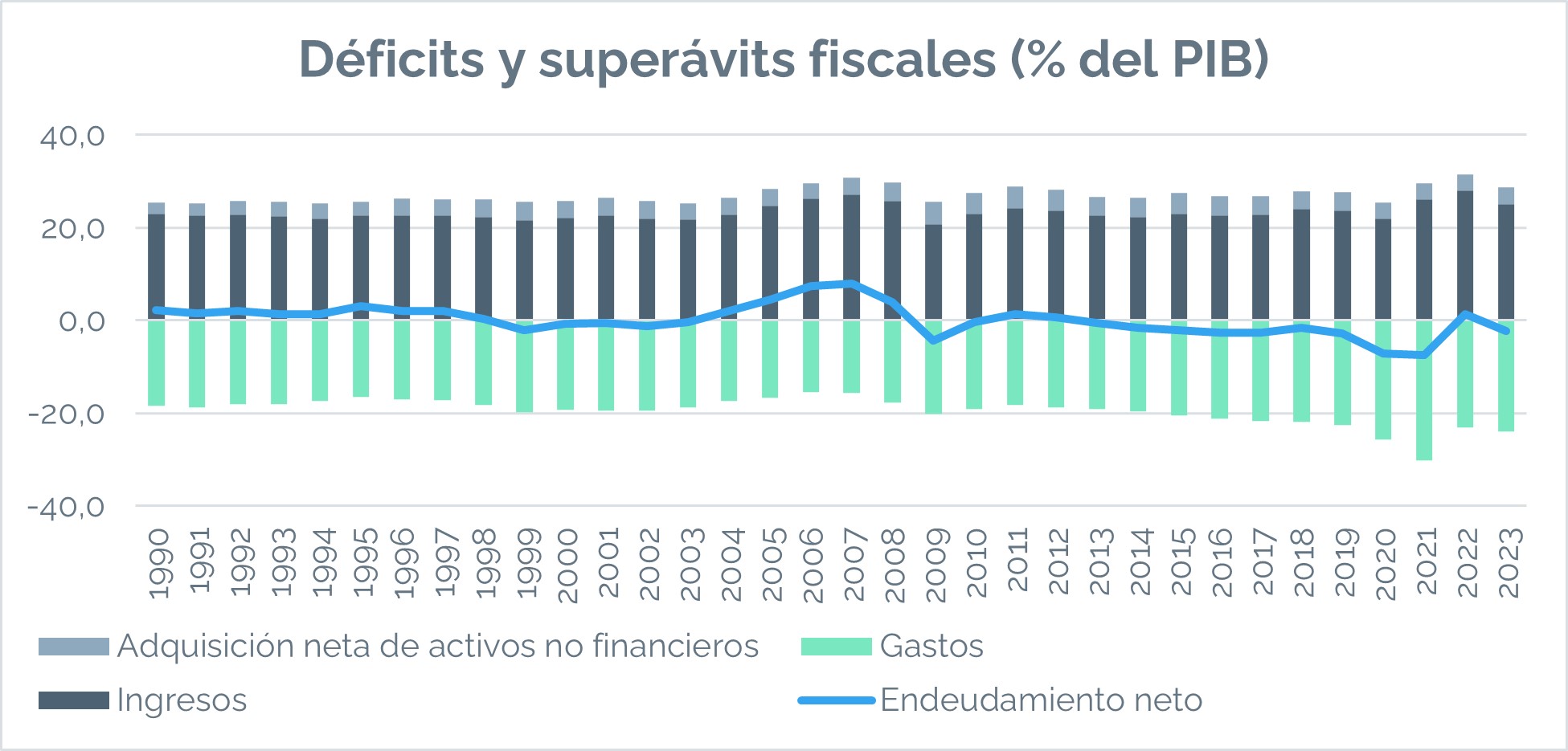 Fuente: Dirección de Presupuesto, Dipres.
 Esto ha dado paso a que las clasificadoras de riesgo de crédito comiencen a ver mayor presión en el gasto, sobre todo cuando se tiene una perspectiva al alza, dada una sociedad que está demandando mayores servicios, lo que genera un estrechamiento en las cuentas fiscales.
Desde 2017, la clasificación de riesgo efectiva (mínima) del país cayó en dos notas, bajando de A+ a A-.
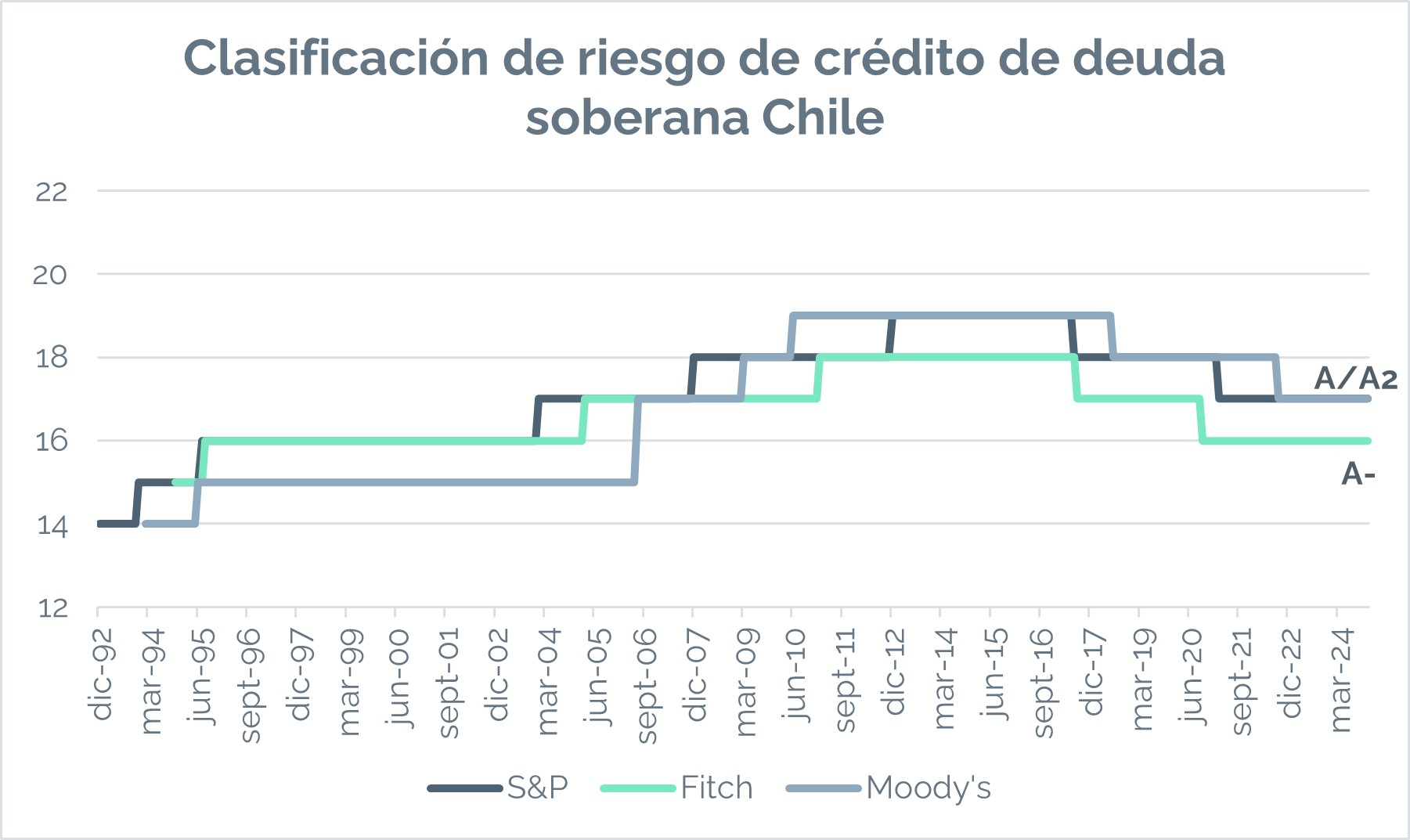 Fuente: S&P, Fitch y Moody’s.
 Si uno observa en dónde ha aumentado más el gasto en Chile —en proporción al gasto total— ha sido en “subsidios y donaciones”, destacando el periodo 2020-2021, donde se transfirieron más de 25.000 millones de dólares con el Ingreso Familiar de Emergencia (IFE), producto de la pandemia. Por otro lado, el pago de intereses todavía representa una pequeña composición del gasto; sin embargo, esto puede elevarse si es que el refinanciamiento de deuda se sigue realizando en un entorno de tasas altas.
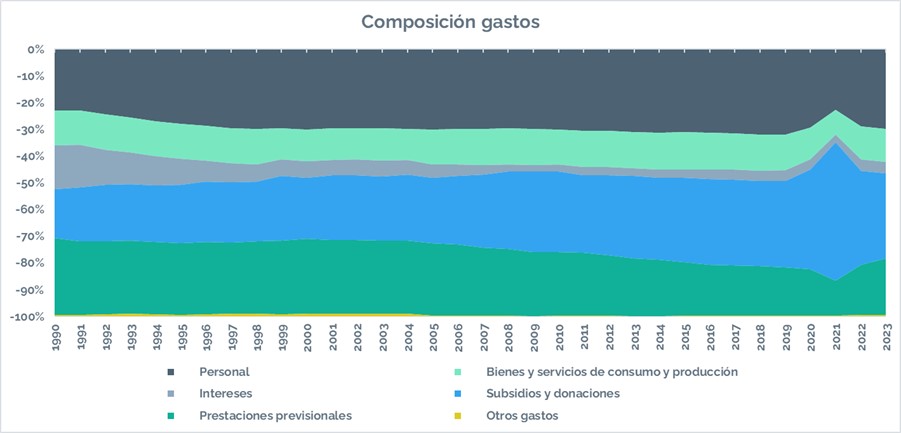 Fuente: Dirección de Presupuesto, Dipres.
 Si bien el rápido aumento de la deuda y los repetidos déficits fiscales son preocupantes, no es algo que no se haya discutido ni tratado en Chile. Desde 2001, nuestro país ha adoptado la regla fiscal que —en términos simples— permite balancear el presupuesto ajustando por el ciclo de la actividad económica no minera, el ciclo del cobre, y los ingresos del litio. Además, la administración del presidente Gabriel Boric fijó un límite para la deuda en 45% del PIB.
La deuda pública de Chile sigue siendo un tema de debate, pero también una oportunidad para reflexionar sobre cómo priorizamos el gasto y ajustamos nuestras políticas para enfrentar los desafíos y demandas de una sociedad cada día más compleja.
Vicente Dourthé, CFA
Portfolio Manager Deuda Privada Fynsa AGF


