


Fynsa

In the midst of the digital era, it is easy to think that the future of work will depend exclusively on knowing how to program or master artificial intelligence (AI). However, the Future of Jobs Report 2025by the World Economic Forumprovides a more nuanced - and optimistic - view: tomorrow's jobs will not only require technical skills, but also profoundly human ones.
The report, which surveyed more than 800 companies in 45 countries, says that 44% of current skills will change in the next five years. 44% of current skills will change in the next five years.. The skills with the fastest projected growth are led by. AI, big data, cybersecurity y digital literacy. More than 90% of key industries anticipate high demand in these areas.
In addition to these competences, skills such as analytical thinking and analytical thinking, creativity, resilience, empathetic leadership y intellectual curiosity. In fact, creative thinking and continuous learning are among the top 5 most valued skills, along with complex problem solving. In a context of constant change, the ability to adapt and reinvent oneself will be just as critical as technical knowledge..
The paper also reveals that 75% of companies plan to implement AI in the next few years, but only half believe their teams are ready to adopt it. This represents a great opportunity to invest in upskilling y reskilling.
Leadership is also transforming. It is no longer enough to lead projects or have technical degrees. Today, profiles capable of managing diverse talent, fostering collaboration and making decisions aligned with global challenges are valued. Skills such as environmental awareness, systems thinking and emotional intelligence are gaining ground in executive positions.
At the same time, some traditional skills - such as manual precision, intensive physical labor or even basic skills such as reading and arithmetic - show a drop of up to 39% in sectors such as energy, mining and technology. It is not that they have ceased to be useful, but rather that their differential value has diminished in the face of automation.
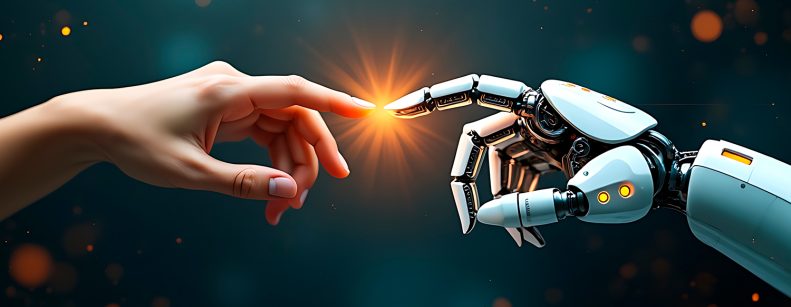
The big conclusion is clear: the future of work does not belong only to machines or only to people. belongs not only to machines and not only to people, but to those who manage to integrate both worlds.but to those who manage to integrate both worlds. Companies will have to invest in continuous training, and people will have to adopt a lifelong learning mentality. In this scenario, those who combine digital skills with empathy, critical thinking and adaptability will be the ones who lead the change.
Because when machines take over the repetitive, the human becomes more essential than ever.
Fynsa


